

MENTAL HEALTH FACTS
The Mental Health Facts are the foundation of The Push-Up Challenge. Your target number of push-ups varies from day to day to reflect a different Mental Health Fact.
They're sourced from peer-reviewed studies by qualified researchers, and undergo a stringent fact-checking process.
Read and share them to start important conversations, boost mental health awareness and help smash the stigma.
DAY 24: Physical activity
MHF Day 24 - Friday 26th June
Download-
Today’s push-up target is 150, because at least 150 minutes of physical activity is recommended each week for good health.
 Regular activity isn’t just good for your body - it’s one of the most effective ways to support your mind. Exercise can ease stress, lift mood, and reduce symptoms of anxiety and depression. When you move, your body releases endorphins and other “feel good” chemicals that boost energy and focus. Just 150 minutes a week - about 20 minutes a day - can help build resilience and improve overall wellbeing. Tips to move more
 -
🚶 Break it up - every step counts, even short walks add up!
-
🕺 Make movement fun - dance, ride, or play your favourite sport.
-
🤝 Exercise with a friend for extra motivation and connection.
Sources:
-
DAY 23: Food fuels your mood
MHF Day 23 - Thursday 25th June
Download-
Today’s push-up target is 160, reflecting research that links a Mediterranean-style diet with a 16% lower risk of depression.
What we eat doesn’t just fuel our bodies, it can also support our mental wellbeing. A Mediterranean-style eating pattern, rich in vegetables, whole grains and legumes can nurture both body and mind.
While diet alone doesn’t determine mental health, eating well can act as a protective factor, alongside movement, sleep, connection and access to support.
Simple ways to support your mental fitness 🥦 Add colour – include an extra serve of vegetables at one meal today
🌾 Choose whole grains – swap white bread or rice for wholegrain options
🫒 Use healthy fats – cook with olive oil or snack on nuts and seeds
🧠 Be kind to yourself – focus on progress, not perfection, when it comes to foodSources:
-
Lugon et al (2024). Association between different diet quality scores and depression risk: the REGICOR population-based cohort study. European Journal of Nutrition, 63(8), 2885-2895. https://doi.org/10.1007/s00394-024-03466-z
-
DAY 22: Young people & support
MHF Day 22 - Wednesday 24th June
Download-
Today’s push-up target is 229, for the 22.9% of people aged 16–34 years who saw a health professional for their mental health.
A growing number of young people are seeking professional support for their mental health. This reflects increased awareness of mental wellbeing, reduced stigma around help seeking, and a greater willingness to talk openly about mental health concerns.
Early, timely support can make a meaningful difference to a young person’s mental health and wellbeing. Youth friendly, accessible services help young people understand what they’re experiencing, build coping skills, and get the right support at the right time.
Supporting young people to get help 🧠 Promote mental health literacy – building insight and knowing when and where to seek help matters.
⏱️ Get help early – mental health services are there to help. You don’t have to wait for things to get worse.
💬 Normalise help seeking – reaching out is a strength, not a weakness.Looking for support?
Find your local headspace centre or for more information and support, go to headspace.org.au.
Kids Helpline - telephone and online counselling for people aged 5 – 25. Call 1800 55 1800.
Source:
DAY 21: Laugh a little, feel a lot
MHF Day 21 - Tuesday 23rd June
Download-
Today’s target is 180 push-ups, because noticing the funnier side of life can enhance happiness for up to six months (~180 days).
Humour isn’t just about joy or laughter in the moment - it plays a role in emotional wellbeing. Research shows that by simple, humour based activities can increase positive emotions and help reduce low mood, making everyday life feel lighter.
One study found that deliberately noticing funny moments or reflecting on what made you laugh for just one week can boost happiness for up to six months. These small, intentional practices can also reduce short-term blues along the way.
Easy ways to add more humour 😂 Notice the funny stuff - everyday moments can be quietly amusing.
🤝 Share a laugh - humour strengthens connection with others.
🎬 Seek lightness - comedy, memes or playful moments all count.
Source:
-
Wellenzohn et al. (2016). Humor-based online positive psychology interventions: A randomized placebo-controlled long-term trial. The Journal of Positive Psychology, 11(6), 584-594. https://doi.org/10.1080/17439760.2015.1137624
-
DAY 20: Financial security
MHF Day 20 - Monday 22nd June
Download-
Today’s push-up target is 120, representing the 1 in 2 young people who are concerned about financial security, according to a recent report.
Cost of living has emerged as the number one concern for young people in Australia. Rising housing costs, everyday expenses and financial uncertainty are shaping how young people feel about their futures and their ability to feel secure and independent.
Ongoing financial pressure can increase stress and is linked to poorer mental health outcomes for young people. Worrying about money, housing and stability can affect confidence, relationships, education and overall wellbeing - especially during key life transitions.
How we can support young people 🗣️ Listen with empathy – feeling heard can ease isolation and stress.
🏠 Advocate for change – stronger income support and affordable housing matter.
💛 Back youth services – supporting organisations like headspace helps more young people get timely support.
DAY 19: REST DAY
It’s our third and final pit stop before the home stretch toward stronger mental health this week.
Use today to call up a mate, water that plant you've been pretending isn't dying, or finally figure out what that mysterious button on your remote actually does.
With any luck, your mind and body are feeling the goods. One last push — let’s finish strong.
DAY 18: The nation is plugged in
MHF Day 18 - Saturday 20th June
Download-
Today’s push-up target is 208, for the 20.8 million Australian adults who are active on social media.
Social media can be a powerful tool for communication, creativity and connection. Many people use it to stay in touch, express themselves, find communities and access information, entertainment and support.
While social media can offer benefits, excessive use, constant comparison, online harassment and bullying can increase stress and negatively affect mental wellbeing. For some people, this can fuel anxiety and low mood.
Supporting healthier use 🧠 Notice how content makes you feel – unfollow or mute accounts that increase stress.
🤝 Balance online and offline connection – real-world relationships still matter.
🌱 Download the Social Media Playbook mini – we have teamed up with Screen Sanity to bring you this practical workbook designed to help you use social platforms thoughtfully and intentionally.
DAY 17: Kindness
MHF Day 17 - Friday 19th June
Download-
Today’s push-up target is 170, because doing at least one act of kindness every day for 7 days in a row may boost happiness, according to a study.
Kindness is a simple act with a profound impact - not only does it brighten someone’s day, but it can also play a role in easing stress and lifting your mood.
Acts of kindness are linked to greater self-esteem, confidence, and a stronger sense of belonging - all key ingredients for good mental health.
Ways to practice kindness
-
💌 Send a thoughtful message to a friend or colleague.
-
🙌 Offer to help someone with a small task.
-
🌱 Do something kind for yourself today.
Source:
-
DAY 16: Getting help
MHF Day 16 - Thursday 18th June
Download-
Today’s push-up target is 190, recognising the 1.9 million Australians living with a mental illness who sought support from a health professional.
Seeking support from a mental health professional can be a strong step toward feeling better. Professional care can help people understand what they’re experiencing, make sense of emotions, and develop practical strategies to cope with life’s challenges.
Professional support can make a real difference, but accessing it isn’t always straightforward. Cost, wait times and stigma can all get in the way. Starting with one small step - like talking to a GP, reaching out to a help-line, or exploring different support options can help move things forward.
🧠 Talk to your GP – your GP provide an assessment or treatment or refer you to a mental health professional.
💬 Talk it through – sharing concerns with someone you trust can be a helpful first step.
🌱 Keep support flexible – needs can change over time, and support can too.If you’re in need of urgent support, Lifeline’s trained crisis supporters are there to listen without judgment. They can also explore other support options with you.
💬 Urgent support:
-
13YARN (24/7): Call 13 92 76 (for Aboriginal & Torres Strait Islander support)
💰 Affordable options:
-
Medicare-subsidised psychology sessions – see your GP for a Mental Health Care Plan and referral.
-
headspace (free support for ages 12-25)
-
Employee Assistance Programs (EAPs) through workplaces
-
Free/low-cost online programs (e.g., This Way Up, myCompass)
You don’t have to face tough times alone - support is available. 💙
Source:
-
DAY 15: LGBTIQA+ suicide attempts
MHF Day 15 - Wednesday 17th June
Download-
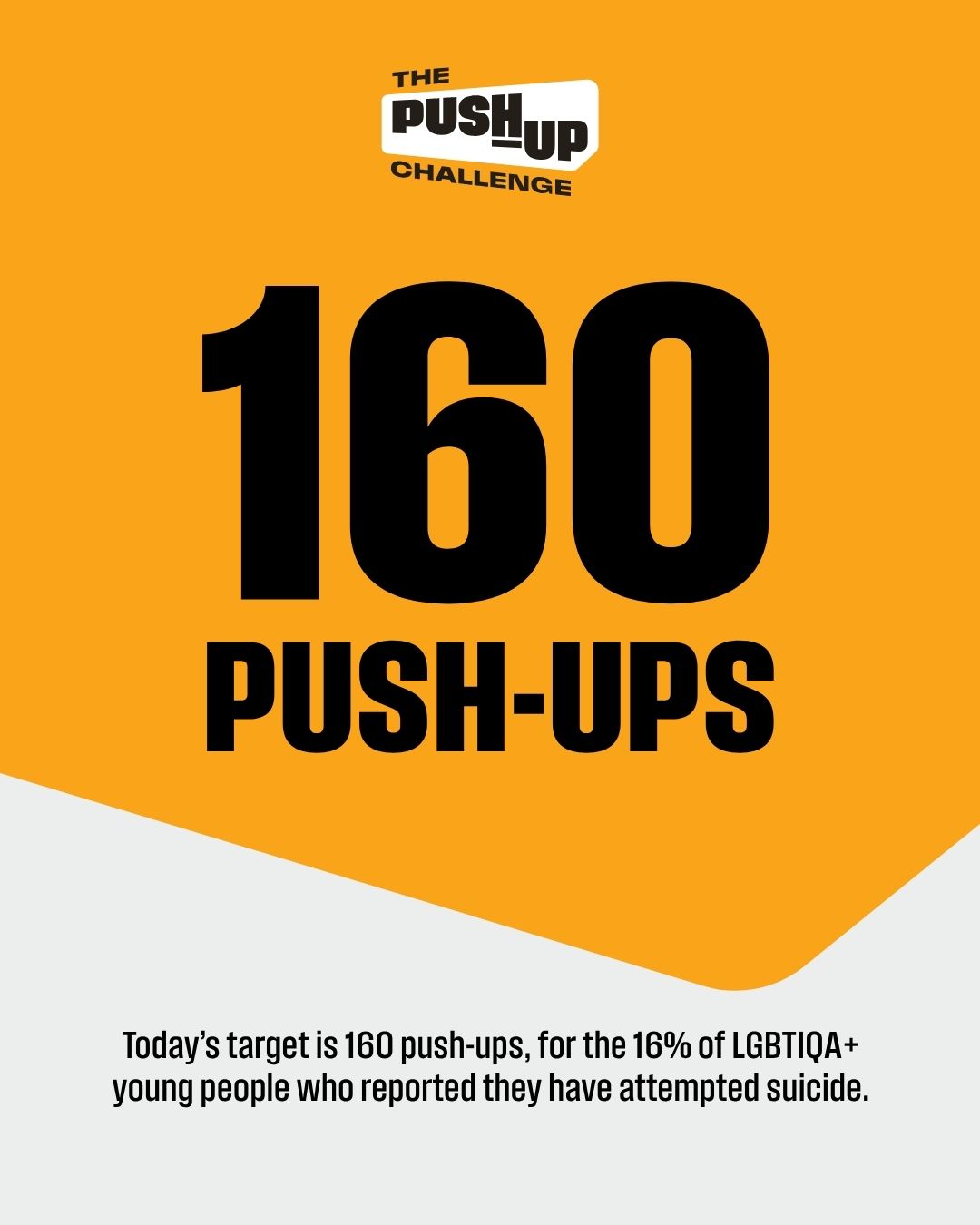
Today’s target is 160 push-ups, for the 16% of LGBTIQA+ young people who reported they have attempted suicide.
Many LGBTIQA+ young people face challenges that can affect mental wellbeing, including discrimination, rejection, bullying and social isolation. These experiences -not a person’s identity - are linked to higher levels of stress, anxiety and depression within LGBTIQA+ communities.
Research shows that welcoming and inclusive spaces can dramatically improve mental health outcomes for LGBTIQA+ young people. Feeling accepted at home, school, work and in the community - along with strong, supportive relationships - helps reduce distress and protect wellbeing.
Protective factors that support wellbeing 🌈 Affirming spaces – environments that respect identity and expression matter.
🤝 Connection – supportive friends, family and peers can reduce isolation.
🧠 Inclusive mental health care – culturally safe support improves outcomes.If you or someone you know is struggling, help is available. You are not alone, and your mental health matters.
-
QLife: Offers free LGBTIQA+ peer support and referral.
-
Minus18: A platform dedicated to supporting LGBTIQA+ youth.
-
PFLAG Australia: A peer support group helping parents, families, and friends with loved ones identifying as LGBTIQA+.
-
headspace: offer young people from the LGBTIQA+ community support with mental health and wellbeing.
Source:
LGBTIQ+ Health Australia Snapshot of Mental Health and Suicide Prevention Statistics for LGBTIQ+ People 2021https://assets.nationbuilder.com/lgbtihealth/pages/549/attachments/original/1648014801/24.10.21_Snapshot_of_MHSP_Statistics_for_LGBTIQ__People_-_Revised.pdf?1648014801
-
DAY 14: Physical activity & depression
MHF Day 14 - Tuesday 16th June
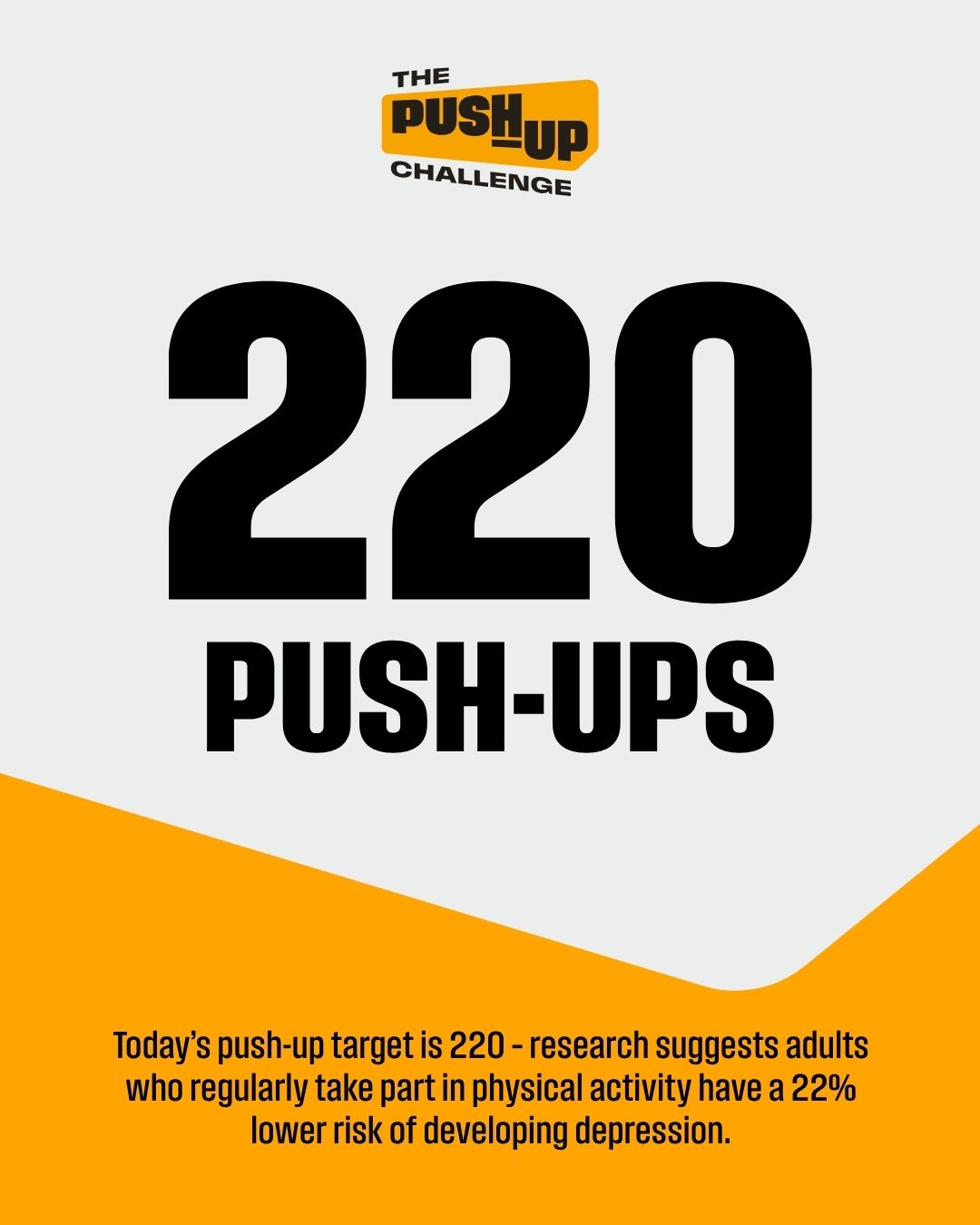
DownloadToday’s push-up target is 220 – research suggests adults who regularly take part in physical activity have a 22% lower risk of developing depression.
Many of us recognise the short-term lift in mood that can come with moving our bodies. Research also shows that regular physical activity is associated with longer-term mental health benefits, including lower levels of depressive symptoms and reduced risk of developing depression over time.
Physical activity can be one helpful protective factor for mental wellbeing. Staying active may support mood, stress management and overall wellbeing, but it doesn’t prevent depression on its own. Mental health is influenced by many factors, including connection, support and life circumstances.
Making movement more achievable
🚶 Move in ways you enjoy – walking, swimming, dancing or gardening all count.
⏱️ Think consistency, not intensity – regular movement matters more than how hard you go.
🤝 Make it social – moving with others can boost motivation and connection.
Source:
-
Schuch et al. 2018, Physical Activity and Incident Depression: A Meta-Analysis of Prospective Cohort Studies. Am J Psychiatry, 175(7), 631-648. https://pubmed.ncbi.nlm.nih.gov/29690792/
DAY 13: Learning new skills
MHF Day 13 - Monday 15th June
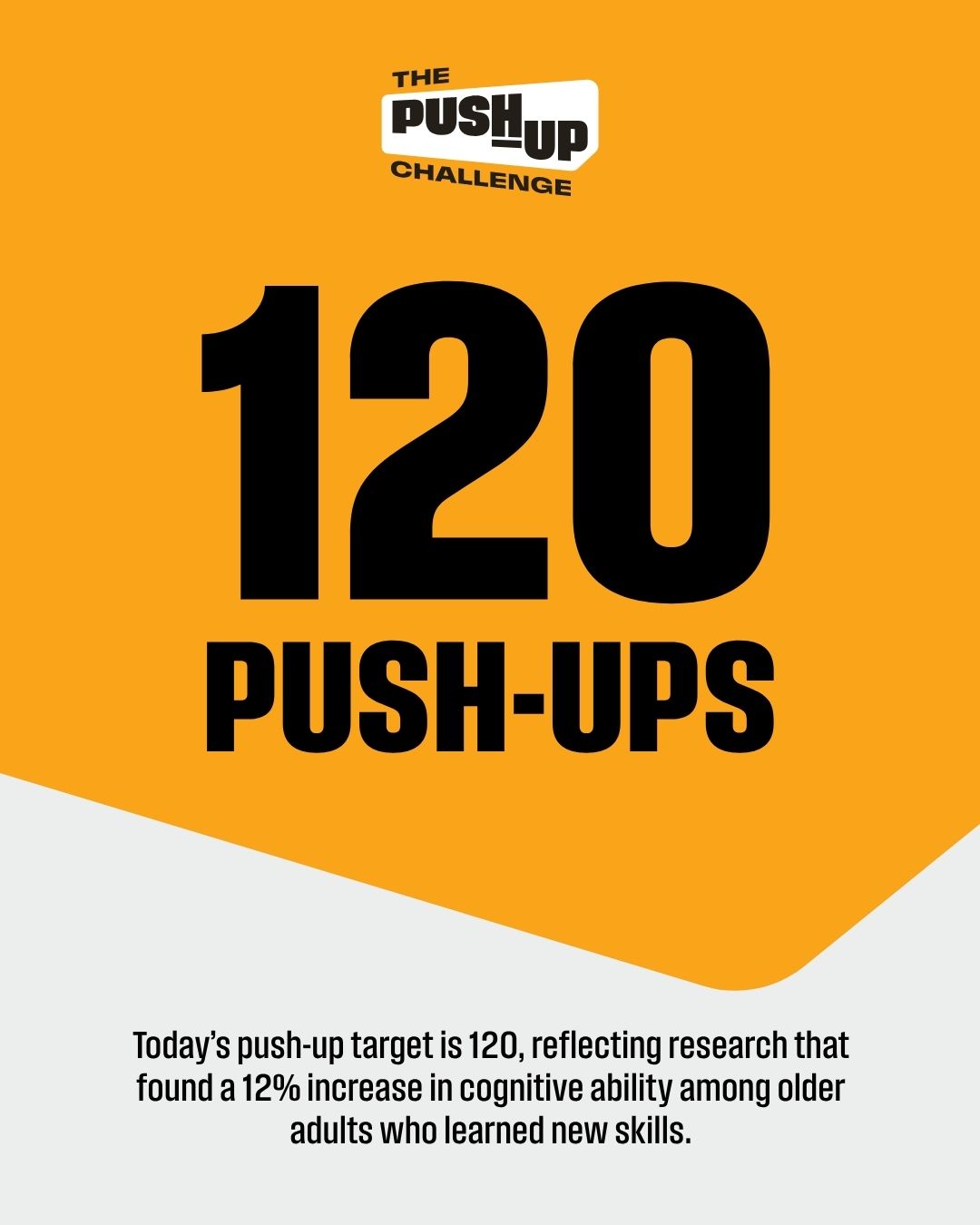
DownloadToday’s push-up target is 120, reflecting research that found a 12% increase in cognitive ability among older adults who learned new skills.
Research shows that taking up new skills later in life can improve memory and thinking, helping to keep the brain engaged and functioning well as we age.
Learning helps the brain grow and adapt by making new connections. This flexibility supports brain health and has been linked to improved mental wellbeing, confidence and happiness, as well as greater social connection and a sense of purpose.
Easy ways to keep learning
🧠 Try something unfamiliar – learning a language, instrument or creative skill can challenge your brain.
🌱 Start small – short, regular practice is enough to support brain health.
📚 Make it enjoyable – choosing skills you enjoy helps learning stick.
Source:
Leanos et al. 2023 ‘The impact of learning multiple real-world skills on cognitive abilities and functional independence in healthy older adults’ J Gerontol B Psychology.The Impact of Learning Multiple Real-World Skills on Cognitive Abilities and Functional Independence in Healthy Older Adults - PMC
DAY 12: REST DAY
Great work so far everyone. We certainly do love our push-ups here at Push-Up HQ, but it's true, you can get too much of a good thing. So take time to chill, chat with friends and family, or do something a bit awesome today. Push-ups are back tomorrow.
DAY 11: Positive emotions
MHF Day 11 - Saturday 13th June
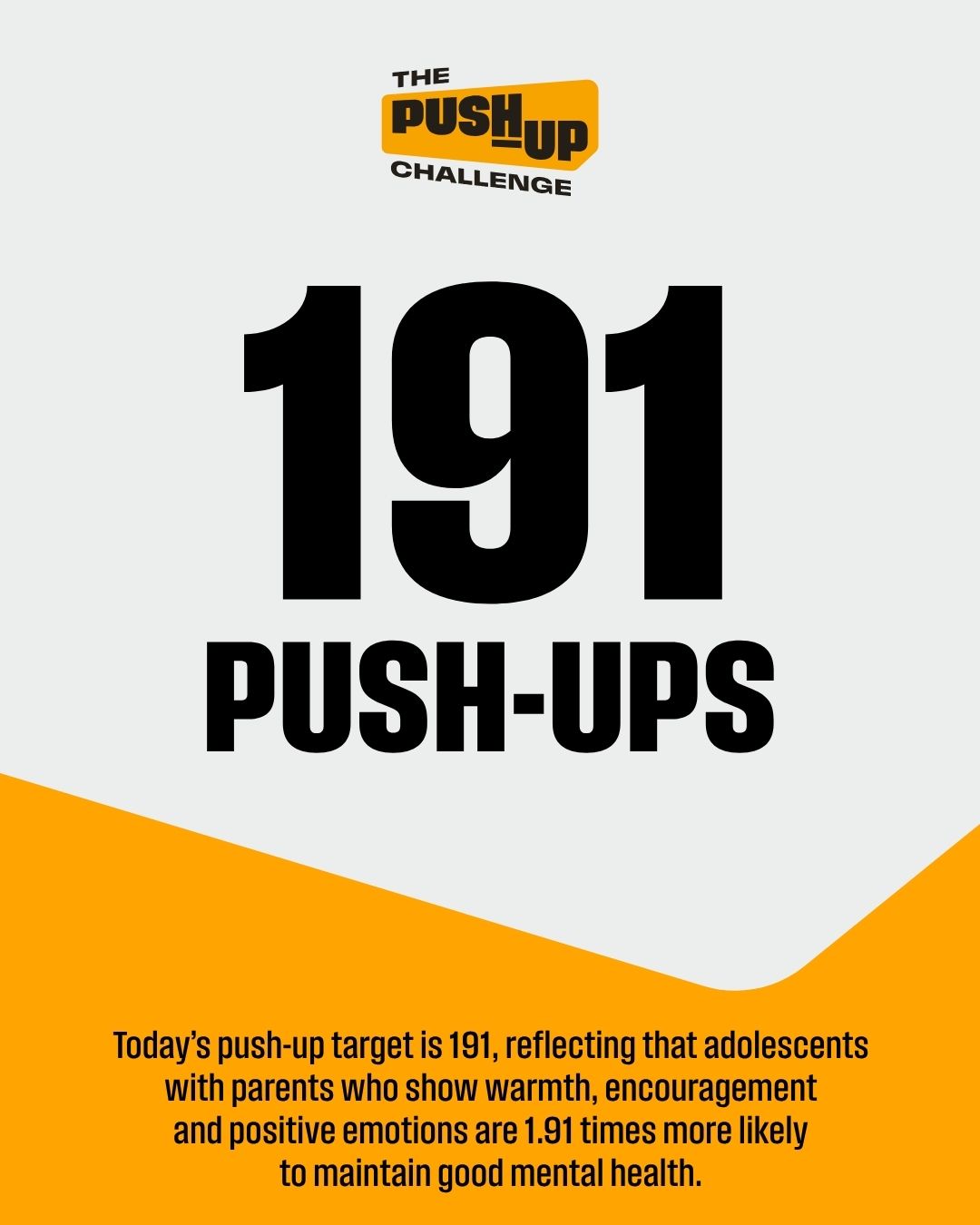
DownloadToday’s push-up target is 191, reflecting that adolescents with parents who show warmth, encouragement and positive emotions are 1.91 times more likely to maintain good mental health.
Adolescence is a time of major emotional, social and brain development. How emotions are expressed at home plays an important role in shaping a young person’s sense of safety, belonging and emotional wellbeing during this period of change.
A supportive home environment - where positive emotions are expressed through words, actions and body language - can help adolescents build resilience, regulate emotions and develop healthy coping strategies. Parents don’t need to be perfect; small, consistent moments of warmth and encouragement can have a lasting impact.
Tips for parents
💬 Show warmth – kind words, encouragement and interest help young people feel valued.
🤝 Practise active listening – give full attention and validate feelings.
🌱 Model healthy coping – showing how you manage emotions teaches lifelong skills.
❤️ Remember, progress over perfection – consistency matters more than getting it right every time.
Source:
Collishaw et al (2016). Mental health resilience in the adolescent offspring of parents with depression: a prospective longitudinal study. The Lancet Psychiatry, 3(1), 49-57 https://pmc.ncbi.nlm.nih.gov/articles/PMC4703896/
DAY 10: Suicidal thoughts
MHF Day 10 - Friday 12th June
DownloadToday’s push-up target is 167, acknowledging the 16.7% (or one in six) Australians aged 16 – 85 years who have experienced suicidal thoughts or behaviours at some point in their lives.
The idea of someone feeling suicidal can be deeply confronting and hard to understand. People who experience suicidal thoughts are often dealing with overwhelming emotional pain, distress, or difficult life circumstances.
Strong social connection, open conversations and professional support can reduce suicide risk. If you or someone you know is having a tough time, it’s important to reach out. Support from family, friends, or a crisis service may make a life-saving difference.
🗣️ Keep conversations open – talking about mental health can make it easier to seek help.
🚧 Know the signs - changes in mood, increased withdrawal, or feelings of hopelessness may indicate someone needs help.
🤝 Stay connected – supportive relationships can reduce isolation and distress.
🧠 Access support early – professional care can help people navigate intense thoughts and feelings.
If a life is in danger, or there is immediate risk of harm, please contact emergency services on 000.
If you feel like you can’t cope - Lifeline (13 11 14) and the Suicide Call Back Service (1300 659 467) offer 24/7 help.
DAY 9: Loneliness
MHF Day 9 - Thursday 11th June
DownloadToday’s push-up target is 160, for the ~1 in 6 Australians who report feeling lonely.
Loneliness can affect people of any age, background or life stage - even those who appear socially connected. Feeling lonely is a common human experience that can quietly impact mental wellbeing.
Ongoing loneliness can wear down wellbeing over time, making stress feel heavier and everyday challenges harder to manage. Reconnecting, strengthening relationships and feeling understood can help protect mental health. Even small moments of connection can make a meaningful difference.
Small ways to reconnect
🤝 Reach out gently – a message or call can be a simple first step.
🌱 Build regular connection – routines like weekly catch‑ups can support wellbeing.
🏘️ Join something local – community groups or shared interests can create a sense of belonging.
Source:
DAY 8: AI steps in
MHF Day 8 - Wednesday 10th June
DownloadToday’s push-up target is 130, for the 1 in 3 people turning to AI for mental health and wellbeing support.
Many people use AI tools because they’re free, immediate and can feel less confronting than talking to someone face-to-face. For some, chatbots can offer prompts, reflection or a starting point when they’re feeling unsure about where to turn.
While AI can be helpful, it can’t replace human connection or qualified mental health care. It doesn’t understand your personal situation, can’t diagnose or treat mental illness, and may pose privacy or safety risks - especially for young people. Support from people still matters.
• 🤖 Understand what AI can (and can’t) do – AI can offer prompts, but it’s not professional care or a replacement for human connection.
• ⏸️ Pause if it feels unhelpful – stop using AI if interactions leave you feeling worse.
• 🤝 Stay connected and seek help – balance digital tools with real-world relationships and professional support.
If you’re a young person with a lot on your mind, headspace can help. There are many ways they can support you in your mental health and wellbeing, and to help you navigate life's challenges. For free and confidential support reach out to headspace
Source:
-
Cross et al 2024, Use of AI in Mental Health Care: Community and Mental Health Professionals Survey, JMIR Ment Health JMIR Mental Health - Use of AI in Mental Health Care: Community and Mental Health Professionals Survey
DAY 7: School Students
MHF Day 7 - Tuesday 9th June
DownloadToday’s push-up target is 170, representing the one in seven school aged students who experience a mental illness each year.
Mental health challenges during childhood and adolescence can affect learning, friendships and everyday functioning. When young people are experiencing mental ill-health, it can impact confidence, school engagement and emotional development - making early awareness and support especially important during these formative years.
Anxiety, depression and behavioural conditions are among the most common challenges for young people. When left unaddressed, these can have longer term effects on wellbeing. Building understanding, reducing stigma and encouraging open conversations helps young Australians feel supported and more able to access help when needed.
Supporting young people’s mental wellbeing
• 🗣️ Keep conversations open – listen without judgement and make space for honest chats.
• 🤝 Build wellbeing – encourage young people to stay connected, move their bodies and use helpful coping strategies.
• 🌱 Seek help early – timely support can reduce the impact and duration of challenges.
Looking for support? Here are some helplines available for school-aged children and their families:
headspace offers online and phone support (1800 650 890) for young people aged 12 - 25.
Kids Helpline - telephone and online counselling for people aged 5 – 25. Call 1800 55 1800.
Call Parentline in your state or territory for counselling and support for parents and carers.
Sources:
DAY 6: Physical Activity & Psychological Distress
MHF Day 6 - Monday 8th June
DownloadToday’s push-up target is 140, because regular movement is associated with 14% lower psychological distress.
Being active isn’t only about physical fitness – it’s one of the most natural ways to boost mental wellbeing. A global study found people who move more report higher levels of happiness, greater life satisfaction, and lower psychological distress.
Physical activity can spark changes in the brain that reduce stress and improve mood. Even light movement can release endorphins, sharpen focus, and increase resilience – giving both the body and mind a boost.
🚶 Move in ways you enjoy – walking, dancing or gardening all count.
⏱️ Start small – short bursts of movement can still support wellbeing.
🤝 Make it social – moving with others can boost motivation and connection.
Sources:
Active Citizens Worldwide 2019
Link: https://www.smartcitiesandsport.org/empowering-policy-makers-through-data-analysis/
DAY 5: REST DAY
Time to give the yourself a rest from push-ups. One of three rest days during the event. Use it wisely, we're back on tomorrow.
DAY 4: Mood conditions
MHF Day 4 - Saturday 6th June
DownloadToday’s push-up target is 150, recognising the ~1.5 million Australians living with mood conditions, including depression.
Mood conditions affect how a person feels, thinks and functions day to day. When changes in mood become ongoing or overwhelming, they can make it harder to manage relationships, work or daily activities. Depression and bipolar disorder are both examples of mood conditions.
Mood conditions are common and treatable. Early support, understanding and access to appropriate mental health care can reduce the severity and duration of symptoms. With the right support, many symptoms of mood conditions can be managed, and people can maintain good mental health and wellbeing.
🤝 Stay connected – regular connection with others supports mental fitness and reduces isolation.
🩺 Seek early support – professional help can make challenges easier to manage when accessed early.
🌱 Be kind to yourself – mental wellbeing can change over time, and support needs may change too.
Sources:
Statistics - Beyond Blue - Beyond Blue
DAY 3: REM Sleep
MHF Day 3 - Friday 5th June
DownloadToday’s target is 120 push-ups, for the ~120 minutes of REM sleep our brains rely on each night to regulate mood and memory.
Rapid Eye Movement (REM) sleep is one stage of the natural sleep cycle we move through several times each night. It’s when dreams are most vivid and the brain becomes highly active. REM sleep builds across multiple sleep cycles.
During REM sleep, the brain processes emotions from the day and strengthens memory, helping support emotional regulation. Most adults need around 7–9 hours of total sleep to get enough REM across the night. Children and teenagers need more sleep to support healthy brain development.
😴 Protect your sleep window – aim for consistent bed and wake times to support full sleep cycles.
📵 Wind down early – reduce screens and bright light before bed to help your brain switch into sleep mode.
🌙 Create a sleep-friendly space – keep your bedroom dark, quiet and comfortable.
Sources:
Healthline 2026, How Much Deep, Light, and REM Sleep Do You Need?
Sleep Foundation 2025, REM sleep, What it is and why it’s important
Harvard Health Publishing 2024, REM sleep: What is it, why is it important, and how can you get more of it? - Harvard Health
DAY 2: Men Often Stay Silent
MHF Day 2 - Thursday 4th June
DownloadToday’s push-up target is 72 push-ups, for the 72% of men who don’t seek help when facing mental health challenges.
Many men face barriers to seeking support, including stigma, pressure to uphold stereotypes of traditional masculinity, as well as access barriers like cost and wait times. These pressures can make it harder to speak up, even when someone knows they’re struggling or could benefit from support.
Delaying support can increase how long mental health challenges last and how intense they feel. It’s important to remember that difficult times can be easier to manage with the right help – and no one has to go through it alone.
🗣️ Start the conversation – check in with someone you trust or let a mate know how you’re really going.
🤝 Stay connected – regular connection with others can strengthen mental fitness and reduce isolation.
📞 Know your options – learn what supports are available, including low cost or free services.
Lifeline (13 11 14) can be a helpful first step when things feel tough.
Sources:
Seidler et al (2016) ‘The role of masculinity in men’s help-seeking for depression: A systematic review’ In Clinical Psychology Review (Vol. 49, pp. 106–118). https://www.sciencedirect.com/science/article/abs/pii/S0272735816300046?via%3Dihub
Why Do So Many Men Avoid Mental Healthcare? | Psychology Today Australia 2025
DAY 1: Nature
MHF Day 1 - Wednesday 3rd June
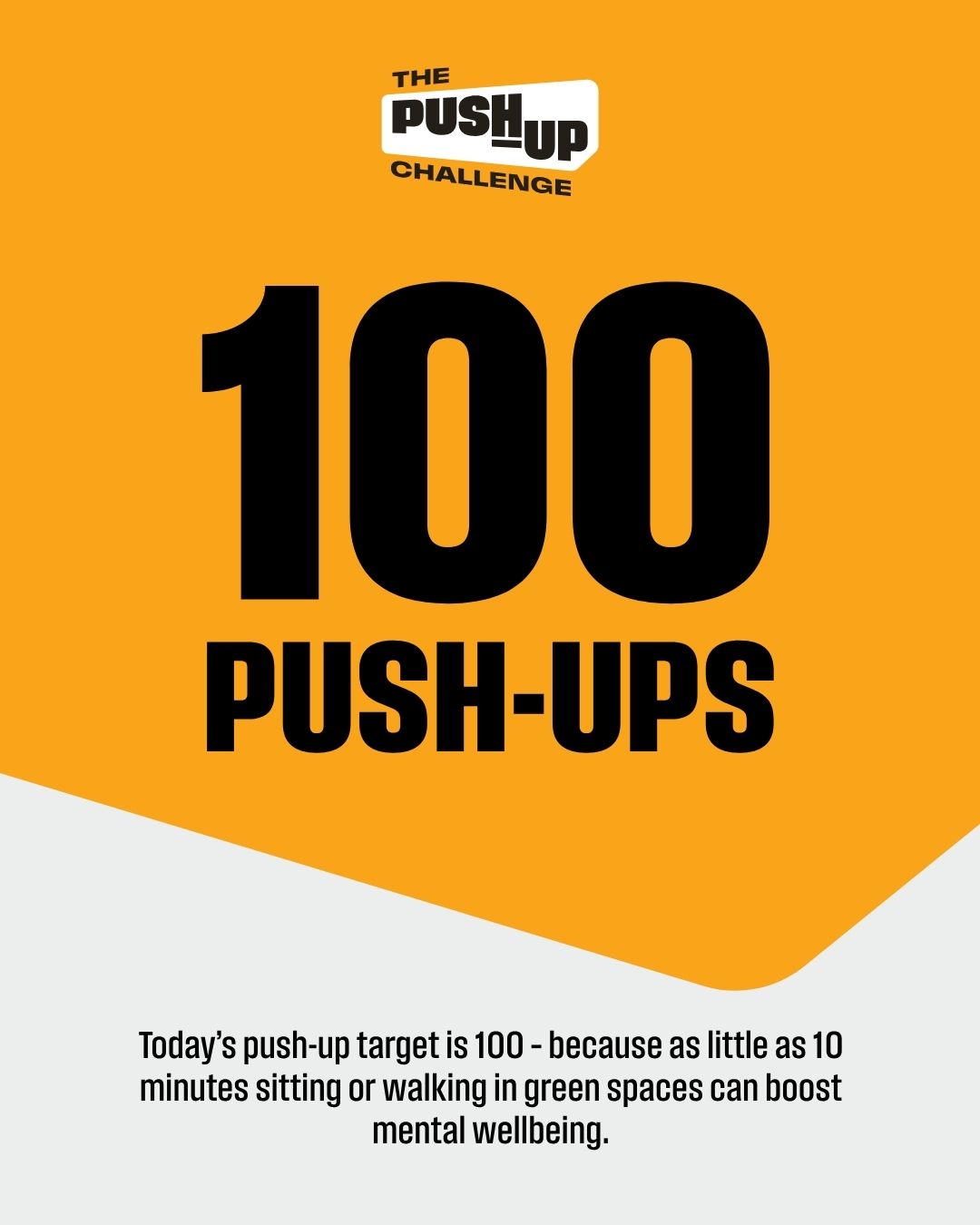
DownloadToday’s push-up target is 100 – because as little as 10 minutes sitting or walking in green spaces can boost mental wellbeing.
Science backs what many of us feel instinctively - nature supports mental wellbeing. Research shows that spending just 10 minutes in green spaces can help reduce stress and anxiety, while increasing feelings of calm, energy and positivity.
Even brief moments outdoors can help lower tension, ease angry or anxious feelings, and leave people feeling more refreshed and relaxed. You don’t need wilderness - a park, garden or tree‑lined street counts.
🌳 Take a micro‑nature break – sit under a tree or stroll through a nearby park, even for 10 minutes.
☕ Go alfresco – enjoy your coffee or lunch outdoors instead of at your desk.
🪴 Bring nature closer – add plants to your home or workspace for a daily mood lift.
Sources:
Meredith et al. 2020 ‘Minimum time dose in nature to positive impact the mental health of college-aged students, and how to measure it: a scoping review’, Environmental Psychology. https://www.frontiersin.org/journals/psychology/articles/10.3389/fpsyg.2019.02942/full